Showing posts with label C. Assignment 2: Television Advertising. Show all posts
Showing posts with label C. Assignment 2: Television Advertising. Show all posts
Monday, 5 June 2017

Monday, 24 April 2017
Editing Task
Written Introduction:
Before the age of digital. There was only Film. Film is still around today, and is very much still in use. Some director/cinematographers swear by film and believe that digital is the end to cinema completely. However, this is not an opinion that everyone shares, as a lot of people believe that digital is actually the future of film. So opinions are widely spread apart. With digital, all footage is captured on camera that put the footage onto SD cards. These are then put into computers, which then allow you to put the clips onto an editing software, which can then be edited there. With film, editing i completely different. You have the footage put onto bits of film which then are taken and are literally cut up with scissors and stuck back together with sticky tape. Once all editing is done. They then get the film sent off and then watch the film the next day. This is called a "daily". With editing on film, you can't see what you've done until the next day when you watch it for the very first time. The jump cut was very apparent in film when it was first found, as this allowed you to go from scene to scene, All the scenes would overlap, till ultimately coming together at the end. The cut was one of the first things in editing, because you simply took some scissors and cut the film, and then stuck it back together with sticky tape. The dissolve allowed people to show a change in time, e.g. in James Bond dissolves are quite apparent as when James Bond gets a call saying he is needed somewhere, there is a dissolve to show that time has passed, instead of showing everything that has happened in between him getting the call, and him going to the new place. The fade allowed you to smoothly end a scene or smoothly transition into a scene. This would usually occur when the scene is quite quiet and not much is happening. The wipe is used to replace one scene with another, to show the end of one scene quite abruptly, and the start of a new scene, putting you within the action with only a small build up. The wipe is very coming in the Star Wars films.
Visual Analysis:
Continuity:
At 0:21 there is an establishing shot. This allows the viewer to see what the surroundings are like and sets the scene. In this clip, it helps us understand where exactly they are, but also where the "Kaijus" are coming from, therefore showing us everything in the scene. As the Kaiju is rising out of the breach at 0:24, the camera is on the left hand side of it, the camera then shows another angle, following the 180 degree rule as the camera only stays on one side. By doing this, it means that the viewer doesn't become confused and isn't thrown out of the film. This therefore keeps the viewer in the film and interested. At 0:37-0:42 the two characters are looking at each other, firstly the Kaiju looking at the "Jaeger", and then the Jaeger looking back at the Kaiju, following the 180 degree rule. By using a shot reverse shot, it allows for the viewer to get a clear picture of what both the characters look like, but also gives you the view from both characters. At 0:40 there is a match on action where the people inside the Jaeger do an action, the camera then shows a shot outside of the Jaeger, where it does the exact same thing. The importance of a match on action is so that the transition is smooth, but also helps move onto the next scene. At 4:10 there is some sort of an eye-line match, however it is very short. The importance of an eye-line match allows you to see what the character will do next and puts you in the characters shoes.
Identification:
Before the age of digital. There was only Film. Film is still around today, and is very much still in use. Some director/cinematographers swear by film and believe that digital is the end to cinema completely. However, this is not an opinion that everyone shares, as a lot of people believe that digital is actually the future of film. So opinions are widely spread apart. With digital, all footage is captured on camera that put the footage onto SD cards. These are then put into computers, which then allow you to put the clips onto an editing software, which can then be edited there. With film, editing i completely different. You have the footage put onto bits of film which then are taken and are literally cut up with scissors and stuck back together with sticky tape. Once all editing is done. They then get the film sent off and then watch the film the next day. This is called a "daily". With editing on film, you can't see what you've done until the next day when you watch it for the very first time. The jump cut was very apparent in film when it was first found, as this allowed you to go from scene to scene, All the scenes would overlap, till ultimately coming together at the end. The cut was one of the first things in editing, because you simply took some scissors and cut the film, and then stuck it back together with sticky tape. The dissolve allowed people to show a change in time, e.g. in James Bond dissolves are quite apparent as when James Bond gets a call saying he is needed somewhere, there is a dissolve to show that time has passed, instead of showing everything that has happened in between him getting the call, and him going to the new place. The fade allowed you to smoothly end a scene or smoothly transition into a scene. This would usually occur when the scene is quite quiet and not much is happening. The wipe is used to replace one scene with another, to show the end of one scene quite abruptly, and the start of a new scene, putting you within the action with only a small build up. The wipe is very coming in the Star Wars films.
Visual Analysis:
Continuity:
At 0:21 there is an establishing shot. This allows the viewer to see what the surroundings are like and sets the scene. In this clip, it helps us understand where exactly they are, but also where the "Kaijus" are coming from, therefore showing us everything in the scene. As the Kaiju is rising out of the breach at 0:24, the camera is on the left hand side of it, the camera then shows another angle, following the 180 degree rule as the camera only stays on one side. By doing this, it means that the viewer doesn't become confused and isn't thrown out of the film. This therefore keeps the viewer in the film and interested. At 0:37-0:42 the two characters are looking at each other, firstly the Kaiju looking at the "Jaeger", and then the Jaeger looking back at the Kaiju, following the 180 degree rule. By using a shot reverse shot, it allows for the viewer to get a clear picture of what both the characters look like, but also gives you the view from both characters. At 0:40 there is a match on action where the people inside the Jaeger do an action, the camera then shows a shot outside of the Jaeger, where it does the exact same thing. The importance of a match on action is so that the transition is smooth, but also helps move onto the next scene. At 4:10 there is some sort of an eye-line match, however it is very short. The importance of an eye-line match allows you to see what the character will do next and puts you in the characters shoes.
Identification:
The main character in the film is "Raleigh Becket". However the scene I picked doesn't have much of him in, he only has a short amount of screen time because the main focus is on the fight between "Striker Eureka" and "Slattern" and Striker sacrificing themselves to "clear a path" for the protagonist, which is "Raleigh". At 2:53 there is a close up of the general's face. The close up is to show emotion and to show the facial expressions clearly so you are put in the position of the character, as you are able to feel what they are feeling, just through the close up. At 2:37 there is a reaction shot of the people in the Jaeger Gypsy. This is because of what the general is saying to them from the other Jaeger. The importance of a reaction shot is to firstly show the emotions of the character, but also to get you to feel how the character is feeling, at that moment in time. Throughout the clip there isn't any POVs, however, there is some OTSS and also some Shot Reverse Shot.
Conclusion:
Conclusion:
Shot variation is where shots are put together to create a moving image. These typically consist of: a wide shot. This is usually used at the start of a sequence to set the tone of the scene. Long shots, which are used enable the audience to know who the main character is, and are also used to introduce a new character. A medium shot which is primarily used in an action scene, so the audience can follow the narrative. Using a close up can mean that the audience can see expressions on the characters face. In film-making, a montage is an editing technique in which shots are juxtaposed in an often fast-paced fashion that compresses time and conveys a lot of information in a relatively short period. Providing information and withholding is when you try to make the narrative more dramatic by giving the audience more information or taking it away. Parallel and cross cut editing involves cutting between two scenes.The reason this is done is to imply that the scenes are taking place at the same time, and will ultimately meet in one point filled with action. A movie(s) that uses this technique would be the Star Wars sequence, flipping backwards and between scenes. The rhythm of editing all depends on the scene and the amount of action that takes place, e.g. in a fight scene, the rhythm of editing will be quite quick, but in a romantic scene it would be quite slow with a lot of close ups and shot reverse shots. During a fight scene, or an emotional scene where a character is dying, the film usually cuts to a soundtrack, e.g. this usually happens in war films where a lot of people are being killed, to get you to focus on the action. By cutting to the sound track, it sometimes allows you to have a guideline to follow when adding in the footage. Throughout the clip, the camera switches between multiple points of view. This is usually between the Jaegers, and the fights that are taking place. You aren't shown the point of view from the Kaiju's.This maybe because of them not being human. Altough the Jaeger's aren't technically human, they are controlled by humans, and are the hero's in the story. In Film and video, a cutaway shot is the interruption of a continuously filmed action by inserting a view of something else. At the start of the clip, there is a cutaway shot where the people that are communicating with the people in the Jaeger, and the goes back to the people in the room. A jump cut is where there is an abrupt transition between two scenes, usually used in action films. There is a jump cut at 0:24 where the camera switches position. The jump cut allows this to happen smoothly, but doesn't completely throw you off, so you are still in the film, and still know whats happening.
Friday, 27 January 2017
TV Advert Evaluation
V05 Advert Evaluation:
Brief:
The brief was to make a 30-90 second advert, re-branding a Unilever product to a different target audience to the original. Our chosen project was a V05 advert. We had to each do a prezi, and then once we were put into groups, we then had to show our prezi to our group and ten vote as to which product we wanted to do, and what advert we liked best. The current target is around 14-24 year olds, both male and female. We re-branded the product to 40-60 year olds, mostly a male audience. We chose to re-brand to this age group because the idea was to make it seem like using V05 can bring you back your youth, and make you feel younger again.
The finished product & feedback:

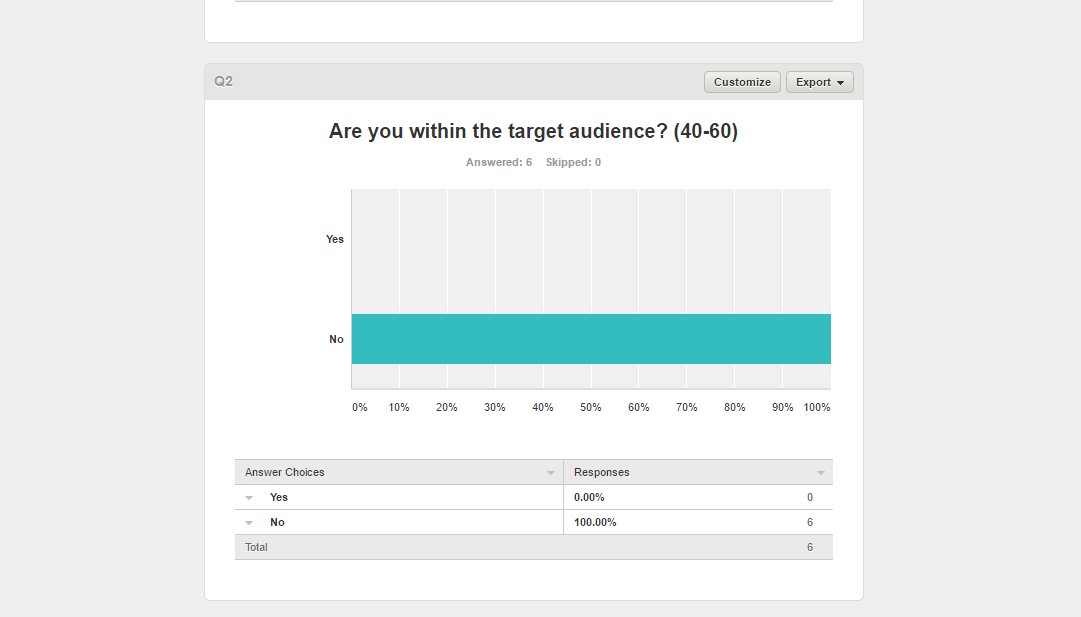
 We collected feedback by creating a survey on Survey Monkey and sending it to everyone in our class, via email. Our advert was viewed by 15-25 year olds, who mostly had used the product and found our advert interesting. Most of our class liked: the idea, graphics, transitions, shot ranges, music, voice over, shots types, but mostly like the ending. The improvements we were given were to make the voice over a bit louder, shorten one of the clips, look at colour grading and also look at flattery, and try to get more of it I believe the was appropriate to the target audience, as it gave the idea of, if you use V05, you will feel and look younger. I also believe that it would have an appropriate affect on them, as they might feel that taking care in how they look, simply by using V05, would make them feel younger. The mise-en-scene was in a toilet/bathroom, so we didn't move anything or add any props into the scenery. We had one prop which was the V05, which was shown in the advert. When filming we only used 6-7 shots. These were mostly shots where the camera was on a tripod and wouldn't move. The shots varied from: Close ups, Medium shots, Long shots and birds eye view(s). For the editing, we each took it in turns, this allowed everyone to evenly share the load. After finishing recording we didn't want the audio from the actual clips. Therefore we got rid of them, and went onto free sound, and got the music and sound effects off that. I put in the sound effects, and helped with editing and putting the sound into the advert. We finished our advert a lot earlier than was expected, so we had a lot of time on our hands. Because of this, we were told to make a shorter version of our ad, around the 10 seconds long. 2 of our 4 man group were helping other groups out with filming. Me and the other person made the ad shorter, however the other person had to help another group out, which left me to do the majority, however, somebody in our class helped me out with a few things, along with the teacher.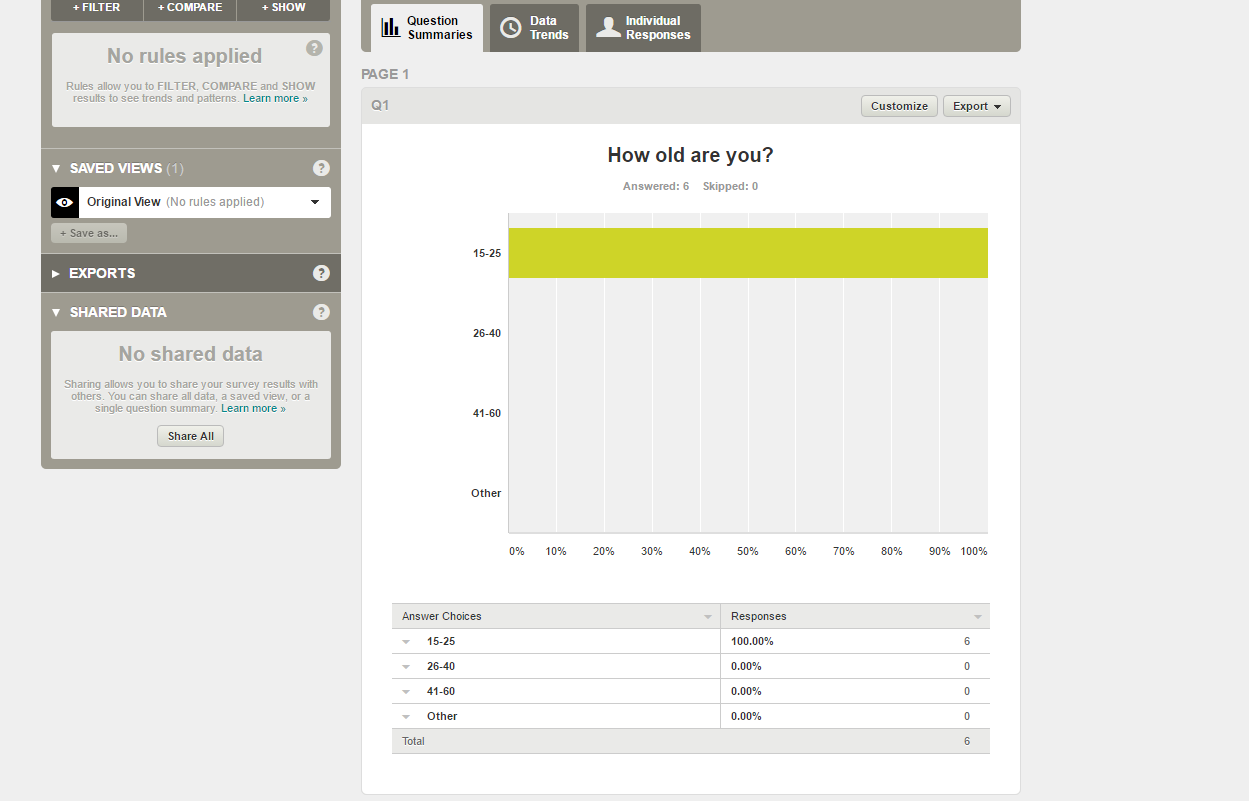

One of our teachers is within the target audience of 40-60. They found the advert interesting, however found the end of the advert slightly offensive as he pointed out that people don't really like being called old. However liked the story line and the editing, and could see why it would appeal to people of the age range. I believe that the product would effectively sell as it gives the idea of using V05 can make you look and feel younger, comforting the fact of the advert saying "break the old".Our main persuasion technique was by making you feel that using V05 can make you look younger and bring you back to your youth. This idea would persuade somebody of this age range to take a bit more care in how they look, and make them look a few years younger. As I've mentioned, the message we were trying to get across was that using V05 will make you feel younger, and look younger. Just taking a bit of care in your appearance could make you feel and look younger. The technique we used for this was having our teacher, who is within the target audience, and get them to use the product, and then transition to me. The idea of putting V05 in your hair, can take you back to the days when you were a teenager and adds that fact of nostalgia. I believe our advert looks professional, however there is a few shots out of focus, and that go on for too long, but these could be easily fixed. It also followed the guidelines of the BCAP code, however the ending can be interpreted as offensive, but is in no way intended to be. It was a spin off of the original slogan "break the mold" and fitted with what we wanted to do.
Personal Reflection:
In the pre-production part. We had an original idea, but changed it a bit to incorporate everyone's idea into my original idea. The idea we came up with turned out how we wanted it to, and was as good as i wanted it to be. However, critically, I would've liked to re-do some of the clips as I felt they were a bit too long or slightly out of focus. Our idea matched what our storyboard shew, and only the scenery was changed after making the storyboard, as we found a better toilet/bathroom to record in. The feedback we got from the class was mixed between good and bad points, (as I've mentioned earlier in this piece) however, we received more good points than bad, which was good to hear (again as I mentioned earlier in this piece. Personally, I am very happy with the final advert. I am happy as it exceeded my expectations, and the idea we came up with together was developed a lot in the pre-production stage, and came out really well. However, if I were to re-do the advert, these are the things that I would change:
- Firstly, I would make the advert a bit longer and add in a bit more to it e.g. maybe after I walk out of the toilet, there could people saying something like "what have you done?" and then having someone follow up by saying, "you've done your hair, its taken years off of you". I personally feel the advert goes by a bit too quick, however I do still think the advert was done really well.
- Secondly, I would re-film some of the shots that were out of focus, to give it a more professional look.
- Thirdly, I would look at the colour grading in the editing section, so that every scene had the same colour and didn't look off. Doing this would make the advert look that bit more professional.
Wednesday, 25 January 2017
Production Diary For Advert
5/1/17
Today we got together as a group, sorted out what each person was doing, me and Nic did the location recces and I started on the risk assessment.
6/1/17
Today I finished off the risk assessment and helped out with the storyboard.
9/1/17
Today me and Raffi both finished off the shot list. I helped out with the storyboard for ideas like everyone else. I also filled out a talent release, however we don't have a date for filming so it is yet to be completed. I also went to get the location release filled out to make sure we are allowed to film in the area we want.
11/1/17
Today I took the location recces again as we've changed location. Also we took some test shots to see if the camera was in view when we were filming and also to make sure continuity was alright and looked professional.
12/1/17
Today we filmed the clips in our advert that involved me and also put them into a folder, and started a project on Premier Pro.
13/1/17
Today we took some test shots for shooting next lesson and also began editing the clips we already have.
19/1/17
Today I edited in the sound of glass breaking into the advert, and also we recorded the voice over for the end and I put that into the ad.
23/1/17
Today we finished off the advert and rendered it.
25/1/17
Today I made a shorter version, which is around 10 seconds long.
Today we got together as a group, sorted out what each person was doing, me and Nic did the location recces and I started on the risk assessment.
6/1/17
Today I finished off the risk assessment and helped out with the storyboard.
9/1/17
Today me and Raffi both finished off the shot list. I helped out with the storyboard for ideas like everyone else. I also filled out a talent release, however we don't have a date for filming so it is yet to be completed. I also went to get the location release filled out to make sure we are allowed to film in the area we want.
11/1/17
Today I took the location recces again as we've changed location. Also we took some test shots to see if the camera was in view when we were filming and also to make sure continuity was alright and looked professional.
12/1/17
Today we filmed the clips in our advert that involved me and also put them into a folder, and started a project on Premier Pro.
13/1/17
Today we took some test shots for shooting next lesson and also began editing the clips we already have.
19/1/17
Today I edited in the sound of glass breaking into the advert, and also we recorded the voice over for the end and I put that into the ad.
23/1/17
Today we finished off the advert and rendered it.
25/1/17
Today I made a shorter version, which is around 10 seconds long.


Monday, 28 November 2016
Subscribe to:
Posts (Atom)